Why Smoke Damage Spreads Far Beyond the Room That Burned
A fire in one bedroom can leave soot and smell in every room, because smoke goes everywhere the air does.
October 16, 2026 · 3 min read
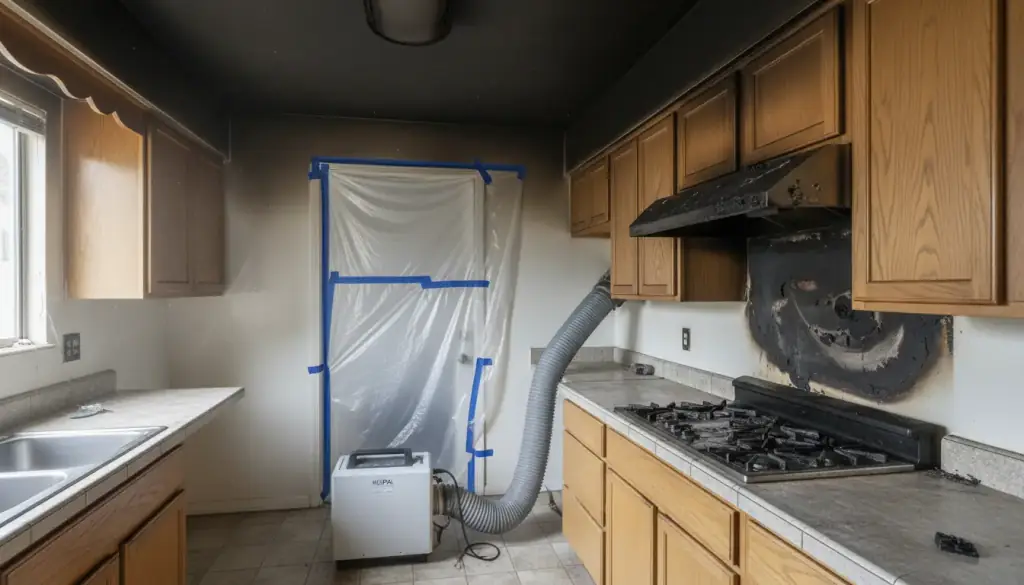
After a small fire, it's natural to look at the burned room and think the damage is contained to it. The fire department is gone, the flames are out, and the rest of the house looks fine. Then you walk into the hallway, the kitchen, the closet at the far end of the house, and everything smells like smoke.
That's normal, and it isn't your imagination. Smoke damage and fire damage are two different problems, and smoke damage almost always reaches farther. Here's why, and what restoration looks like once you understand it.
Smoke goes wherever the air goes
A fire heats the air around it, and hot air rises and pushes outward. Smoke rides along with it. It moves up and across ceilings, down hallways, through gaps around doors, into wall cavities through outlets and recessed lights, and into the ductwork if the HVAC system is running. A closed door slows it down, but doesn't stop it.
A customer, Karen B., described exactly this in a Google review: “I used Socal Express Restoration & Construction after a mattress fire in one bedroom. There was a lot of smoke damage throughout the house.” One bedroom burned. The whole house needed attention.
Soot isn't all the same
The residue left behind depends on what burned and how hot and fast it burned. Some soot is dry and powdery and lifts off with the right vacuuming and dry cleaning. Some is oily or sticky and smears when you wipe it, which spreads it deeper into the surface. Plastics, foam and synthetic fabrics tend to leave residue that's harder to remove than plain paper or wood.
That's why wiping a wall with a wet rag usually makes things worse. The wrong method grinds residue into paint, grout and fabric. Choosing the cleaning method for each surface is a big part of what a restoration crew does.
Why the smell lingers
Odor comes from tiny particles and gases that settle into porous things: drywall, carpet, upholstery, mattresses, curtains, clothing, insulation inside walls. Opening windows and running fans helps with what's in the air, but it doesn't touch what's soaked into the materials. If the HVAC ran during or after the fire, the ducts can carry smoke residue to every room each time the system kicks on.
This is why a house can look clean, smell fine for a day, and then smell like smoke again when it warms up. The source is still in the materials. It has to be removed or treated, not covered up.
What restoration typically involves
Every fire is different, but a thorough soot and smoke job generally follows a sequence like this:
- An assessment of every room, not just the burned one, to map where smoke and soot actually went.
- Protecting areas that are still clean, with barriers and air filtration, so the work doesn't move residue around.
- Dry cleaning of ceilings, walls and surfaces first, then wet cleaning where the residue calls for it.
- Cleaning or replacing soft goods such as upholstery, drapes and carpet, depending on how far the smoke got in.
- Treating odor at the source, and checking the HVAC system and ducts.
- Removing and replacing materials that can't be cleaned, such as charred drywall or insulation, then rebuilding.
SoCal Express Restoration & Construction handles fire cleanup along with soot and smoke damage restoration, and because the company also does drywall repair, painting and reconstruction, the rebuild doesn't have to be handed off to someone new. If water was used to put the fire out, water damage restoration can happen in the same visit, since wet and smoky often go together.
What you can do right now
Avoid cleaning soot yourself with household sponges and sprays, avoid turning on the HVAC until someone has looked at it, and don't eat food that was exposed to heavy smoke or heat in an open pantry. Take photos of the damage in every room before anything gets cleaned or moved. Keep a list of items you think are affected.
On insurance, don't guess. Check your policy, and ask your adjuster what they cover and how they want the damage documented. The company works with insurance claims, so you can ask the project manager what paperwork will help.
If you've had a fire, even a small one, call SoCal Express Restoration & Construction at (866) 731-0013. The Fire Damage Restoration page has more on how the company handles soot, smoke and cleanup.
SoCal Express Restoration & Construction, (866) 731-0013
Call (866) 731-0013More articles
The First Hour After a Burst Pipe or Flood: What to Do Before the Crew Arrives
The first sixty minutes after a water loss decide how far the damage spreads, so here's the short list that actually helps.
How Long Does It Take to Dry Out a House After Water Damage?
A dry-looking floor can hide a wet wall, which is why proper drying takes several days and daily checking.