Mold · Los Angeles + Orange County
Mold remediation and removal
Inspection first, then containment, removal and source treatment, so the mold comes out and stays out.
Mold lives where water used to sit
Mold doesn't appear for no reason. It grows where moisture stayed: behind drywall after a slow leak, under a bathroom floor, along the underside of a roof deck in an attic, inside a wall cavity that never fully dried after a flood. Most of the time the first sign isn't a patch on the wall, it's a musty smell or a stain that keeps coming back.
That's why scrubbing the visible spot rarely solves anything. The growth you can see is often the edge of a larger colony inside the wall, and removing only what shows leaves the rest feeding on the same damp material. In older Encino and Sherman Oaks homes with past plumbing leaks, this is the pattern we see most.
Mold is not a cosmetic problem. Disturbing it without control sends spores through the house, which is how a one-room problem becomes a whole-house problem. The job has to be planned around keeping it contained.
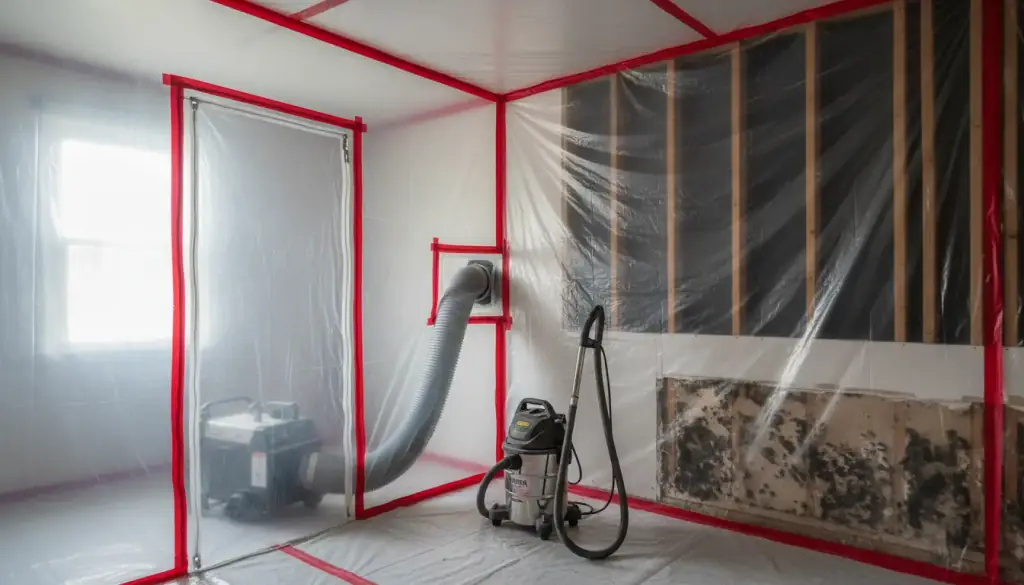
A containment chamber of plastic sheeting with taped seams, ducting and an opened wall
Inspection, containment, then removal
Our process begins with an inspection, because mold inspection precedes removal on every job. You can't remediate what you haven't located, and testing tells us what we're dealing with and how far it reaches. If you're not sure you have mold at all, start with mold inspection and testing before spending anything on removal.
Once the scope is clear, the work area is encapsulated. Poly sheeting goes up with sealed seams so the affected area is isolated from the rest of the building, and nothing travels out on air or foot traffic. Inside containment, our crews work in suits, masks and gloves, because disturbing mold without protection is how technicians get sick and how homes get cross-contaminated.
Then comes removal. Moldy porous material, such as drywall and insulation, is taken out and bagged inside the containment, and the structure that stays is cleaned and treated. Source treatment follows, so the surfaces left behind are addressed and not just the material that came out.
Call (866) 731-0013 and the line is answered 24/7. Mold sometimes follows a water loss closely, and if there's standing water or wet drywall right now, water damage restoration should start first so you aren't growing a bigger problem while you wait.
Fix the moisture, then close the walls
Removal without a moisture fix is a temporary cleaning. If the leak, the condensation or the humid crawl space that fed the mold is still there, it will come back. We look for the source during the job, and we'll tell you plainly what needs to be repaired so the mold doesn't return.
People often ask whether mold can be fully removed, how fast it grows, and whether insurance pays for it. Those are fair questions with answers that depend on the home and the policy: growth can start quickly where moisture lingers, removal is aimed at bringing the area back to a safe, clean condition, and coverage varies by carrier, so check your policy. We'll walk through each one at your property.
After removal the walls are open, and you don't want them that way. Drywall repair and painting finishes the room, and the same company that contained the mold can rebuild what it took out. We offer a free quote, and our guarantee holds here as everywhere: if you are not satisfied with the work we have done, we will make it right.
24/7 emergency line, licensed and insured, with a free quote on mold work. Call (866) 731-0013.