The First Hour After a Burst Pipe or Flood: What to Do Before the Crew Arrives
The first sixty minutes after a water loss decide how far the damage spreads, so here's the short list that actually helps.
October 16, 2026 · 4 min read
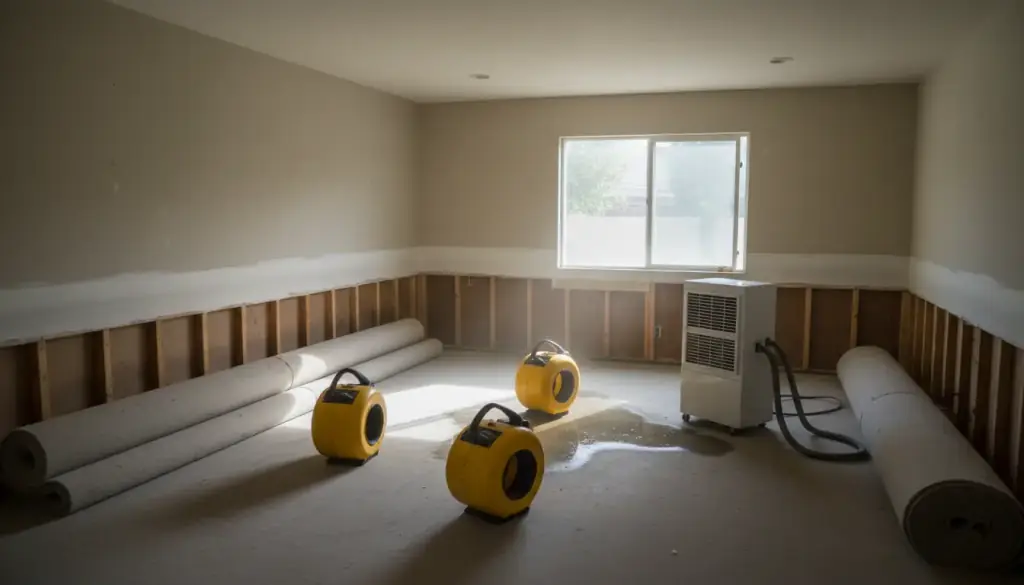
A pipe lets go at 2 a.m., or the supply hose on the washing machine splits while you're at work. Water is moving across the floor, and the next sixty minutes matter more than most people expect. Water doesn't stay where it lands. It runs to the lowest point, soaks into baseboards, and wicks up drywall.
This isn't a replacement for a professional assessment. It's the short list of things that keep a bad day from turning into a worse one, written for homeowners and property managers in Los Angeles and Orange County who are standing in the middle of it right now.
Stop the water first
Find the shutoff. Most homes have a main shutoff valve where the water line enters the house, and every sink and toilet has a smaller valve under or behind it. If the water is coming from a supply line, turn off the nearest fixture valve. If it's coming from inside a wall or ceiling, the main is the only thing that will stop it.
If you can't find the main within a minute or two, don't keep hunting while the floor floods. Call for help and stay on the line. The person answering can talk you through where it usually is. If the source is a dishwasher, washer or water heater, shut off that appliance's own valve, and unplug it only if the outlet and the floor around it are completely dry.
Think about electricity before you touch anything
This is the part people underestimate. If water is reaching outlets, power strips or the base of appliances, and your breaker panel is somewhere dry that you can reach without stepping in water, switch off the breakers for the affected rooms. If the panel is in the wet area, don't go in. Stay out and tell the dispatcher when you call.
Ceilings deserve the same caution. A stained, sagging or bulging ceiling is holding water, and it can let go all at once. Keep people and pets out from under it, and don't turn on a light fixture that water has run through.
What helps while you wait
You can't dry a house yourself in an hour, but you can protect what hasn't been soaked yet. Spend the time on these:
- Move small items off wet floors: shoes, rugs, books, boxes, electronics, anything that soaks up water or can be ruined by it.
- Lift furniture legs out of wet carpet, or slide foil or plastic under them so dye and finish don't transfer to the floor.
- Pull cushions off wet upholstery and prop them up so air can reach them.
- Take photos and short videos of the water, the source, and every damaged item before you move more things.
- Write down what time you noticed the water and when you shut it off. It helps the crew and it helps your claim.
Photos matter more than they feel like they do in the moment. Once a crew starts pulling wet carpet and cutting out drywall, the room won't look the way it did when the water hit.
What to leave alone
Don't run a household vacuum over standing water. Don't crank up the heat and close the doors and assume the room will dry out on its own. Warm, wet, closed air is exactly what lets moisture settle into walls and subfloors. And don't start ripping out finished materials yourself before anyone has measured how far the moisture went. You can easily tear out too little, which leaves wet material behind, or too much, which turns a repair into a rebuild.
One more thing: not all water is the same. If it came from a sewer backup, an overflowing toilet or a drain, keep kids and pets out, don't handle anything it touched, and say so on the phone. That's a different job from a clean supply-line break, and the crew needs to know before they arrive. Emergency sewage cleanup is part of what SoCal Express handles.
When the crew gets there
SoCal Express Restoration & Construction answers 24/7, and in most cases the crew is at your door within the hour. Here's how one customer, Farrah M., described her experience in a Google review: “Fast outstanding service. Arrived while the plumber was completing the pipe break. They went to work immediately in a room that needed the wall and ceiling removed and then moved on to the garage.”
Expect the crew to look past the visible puddle. Water travels, so they'll check adjacent rooms, the wall cavities, the garage and the floor below. Then comes extraction, then drying, and the details of that are in our post on how long a dry-out takes. The company also works with insurance claims. Check your policy for what it covers and call your insurance company early, and ask your adjuster what documentation they want to see.
If there's water on your floor right now, call SoCal Express Restoration & Construction at (866) 731-0013, any hour. The Water Damage Restoration page on this site explains how extraction and drying work from the first visit forward.
SoCal Express Restoration & Construction, (866) 731-0013
Call (866) 731-0013More articles
How Long Does It Take to Dry Out a House After Water Damage?
A dry-looking floor can hide a wet wall, which is why proper drying takes several days and daily checking.
Why Smoke Damage Spreads Far Beyond the Room That Burned
A fire in one bedroom can leave soot and smell in every room, because smoke goes everywhere the air does.