How Long Does It Take to Dry Out a House After Water Damage?
A dry-looking floor can hide a wet wall, which is why proper drying takes several days and daily checking.
October 16, 2026 · 4 min read
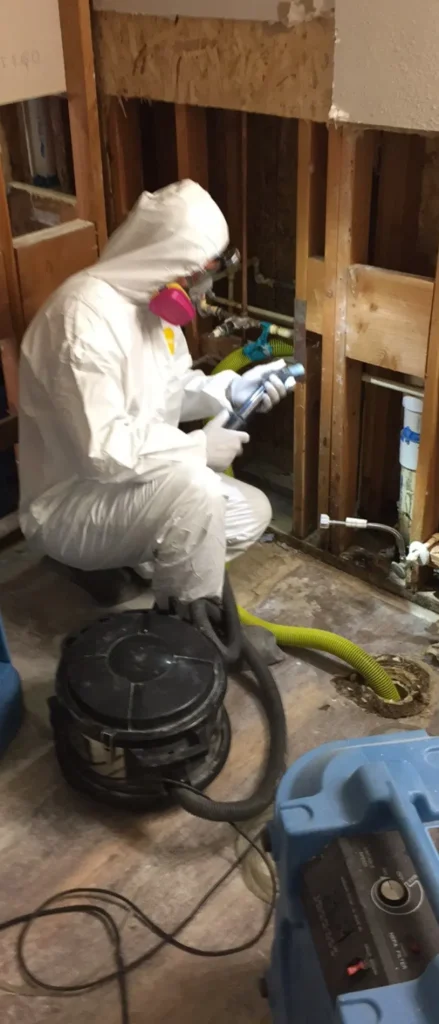
The most common question after a water loss is some version of "how long until this is over?" The honest answer is that drying takes days, not hours, and the length depends on what got wet, how long it sat, and how many layers the water soaked into. Here's why, and what's happening during those days.
Nobody can promise you an exact number before looking at the job. What you can know is what the process is, so the days make sense and the equipment in your living room doesn't feel like a mystery.
First, get the bulk water out
Drying equipment is built to pull moisture out of materials. It isn't built to remove standing water. So the first step is extraction: pumps and extractors that remove what's pooled on the floor and pull what they can from carpet and pad. The more water that's physically removed up front, the less there is to evaporate later, and that shortens everything after it.
This is also why the first hour matters. Water that sits for a long time has more time to soak into the subfloor, baseboards and the bottom of the walls. Water that's pulled out quickly has less.
Why walls and floors sometimes get opened
Water gets into places you can't see. Drywall wicks moisture upward from the floor. Insulation inside a wall holds water like a sponge. Water that entered through a ceiling can end up inside the wall below it. A surface that looks and feels fine can have a soaked cavity behind it, and moist air that's sealed in a closed wall dries very slowly, if at all.
That's why crews often remove the bottom section of drywall, pull baseboards, or take out wet insulation so air can reach the framing. It's called a flood cut, and it's a judgment call based on moisture readings. Material that can dry in place is left alone. Material that can't, such as saturated insulation or drywall that's lost its strength, comes out.
The equipment and what each piece does
A typical dry-out uses a few kinds of equipment working together. Each one handles a different part of the problem, and none of them works well alone:
- Air movers push air across wet surfaces so moisture leaves the material and enters the room air.
- Dehumidifiers pull that moisture out of the air so it can't settle back into walls, ceilings and furniture.
- Heaters raise the temperature, which helps moisture evaporate faster from damp materials.
- Specialty drying setups push or pull air through wall cavities and under cabinets or flooring where open air can't reach.
The loud hum in your house for those days is the sound of the work. Turning equipment off early because the noise is annoying is one of the most common reasons a job fails to dry completely.
How a crew knows when it's actually dry
Dry doesn't mean it feels dry to your hand. A crew uses moisture meters on drywall, wood and framing, and compares readings to materials in an unaffected part of the house. They take readings, adjust the equipment, and then come back and take them again. The goal is to see numbers moving down day over day, and to keep going until they match your normal.
One customer described that daily rhythm in a Google review. Farrah M. wrote: “Moved in heaters to dry both areas. Both of the men worked tirelessly through out the week to constantly check the temperatures to be sure of dryness.” That's what a proper dry-out looks like from the homeowner's side: someone coming back, checking, adjusting.
What changes how long it takes
Every job is different, but these are the usual factors, and they're worth asking about when you get your estimate:
- How long the water sat before extraction started.
- How many rooms and how many layers got wet, such as carpet, pad, subfloor and wall.
- What the materials are. Hardwood, tile, drywall and carpet dry at very different rates.
- Whether the water was clean at the start or came from a drain or sewer line, which changes what can be saved.
- Whether the house is humid or dry that week, since the dehumidifiers have more to do on a humid day.
Drying also comes in two parts. The first is the dry-out itself. The second, if walls or floors were opened, is the rebuild: new drywall, paint, flooring. That second phase is its own timeline, and it's one reason it helps to have one company that handles both.
If your home has been wet and you want to know what the process would look like for your property, call SoCal Express Restoration & Construction at (866) 731-0013 for a free quote. The Water Damage Restoration page lays out the steps, and the Residential Restoration page covers what happens after the drying is done.
SoCal Express Restoration & Construction, (866) 731-0013
Call (866) 731-0013More articles
The First Hour After a Burst Pipe or Flood: What to Do Before the Crew Arrives
The first sixty minutes after a water loss decide how far the damage spreads, so here's the short list that actually helps.
Why Smoke Damage Spreads Far Beyond the Room That Burned
A fire in one bedroom can leave soot and smell in every room, because smoke goes everywhere the air does.