Why Mold Testing Should Come Before Mold Removal
Removing mold without finding out what it is, where it is and why it's there is a good way to pay for the job twice.
October 16, 2026 · 4 min read
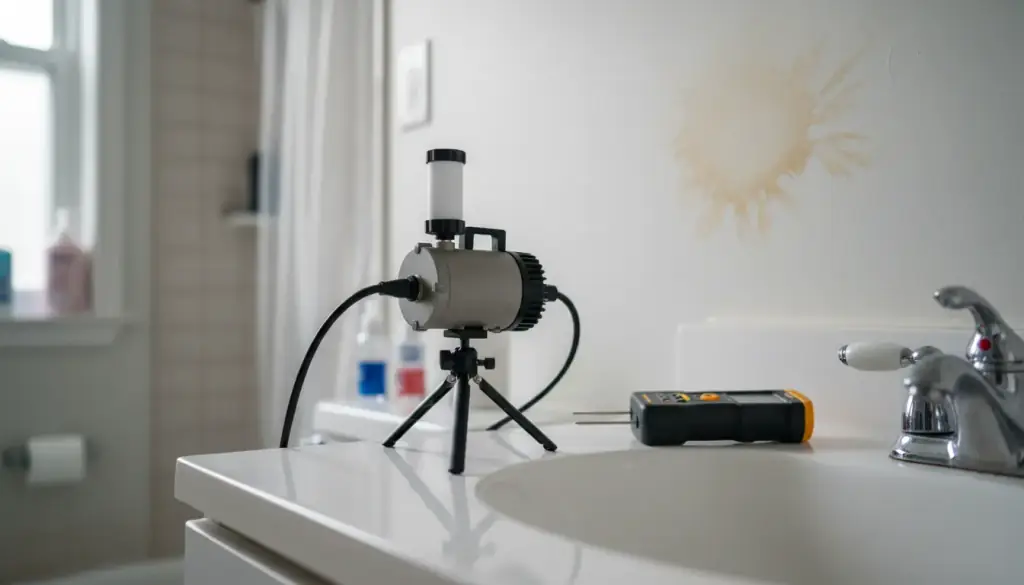
When people find a dark spot on a wall or notice a musty smell under the sink, the first instinct is to scrub it, bleach it or call someone to get rid of it. That instinct makes sense. The problem is that mold removal without inspection and testing first is a guess, and guessing with mold gets expensive.
At SoCal Express Restoration & Construction, mold inspection comes before removal. Here's the reasoning, so you know what to expect and what to ask for from anyone you hire.
What testing tells you that your eyes can't
Visible mold is often just the part that reached a surface. It can also be growing inside a wall cavity, above a ceiling, under flooring or behind cabinets. A stain you can see might be a small patch or the edge of something much bigger. Inspection is how you find out which.
In general practice, an inspector looks at the building and the moisture history, uses a moisture meter to find damp materials that look normal, and may take air or surface samples that go to a lab. Those results help show what's present and where it's concentrated, and they give you a baseline. After remediation, follow-up testing can show whether the area actually came back to normal.
Keep in mind that a test is a snapshot. Spores are part of ordinary outdoor and indoor air, so the useful question isn't whether any are present. It's whether the indoor results look different from the outdoor air and from a room that was never wet, and whether the moisture readings and the visible clues point to the same spot. A good inspector explains the results in plain language instead of handing you a lab sheet and a sales pitch.
Signs it's worth getting a mold inspection
You don't need to see mold to have a reason to look. These are the usual prompts:
- A musty or earthy smell that stays in one room or comes back after cleaning.
- A past water event, such as a burst pipe, roof leak or appliance leak, that wasn't dried out professionally.
- Stains, bubbling paint or warped drywall on walls and ceilings.
- Condensation that keeps showing up on windows, in bathrooms, or in closets on exterior walls.
- Visible dark or fuzzy growth, especially around plumbing, window frames and attic hatches.
- A home you're about to buy, rent out or move into after a water problem.
If anyone in the home has health concerns they think might be related, talk to a doctor. An inspection can tell you about the building. It can't tell you about anyone's health.
Find the moisture, or the mold comes back
Mold needs moisture to grow. If you remove the mold and leave the leak, the humidity or the wet insulation that fed it, you'll be looking at it again. A real inspection looks for the source: a slow pipe leak, a roof flashing problem, a poorly vented bathroom, a damp crawl space. Fixing that source is part of the plan, not an afterthought.
It's also why testing first keeps you from paying for the wrong job. If the numbers show a small, localized problem, you shouldn't be told the whole house needs to be gutted. If they show something wider, you'd want to know before a crew opens one wall and finds more.
Why containment matters once removal starts
Disturbing mold releases spores into the air. Scrubbing or tearing out contaminated drywall in an open room can spread the problem into rooms that were fine. So professional remediation works inside a contained area: plastic sheeting sealed at the seams, with air pulled through filtration so contaminated air doesn't drift into the rest of the house. Workers wear protective gear, including respirators, and materials come out bagged.
SoCal Express Restoration & Construction describes its remediation work as containment, removal and source treatment. Containment is first on that list for a reason: it's what keeps a bedroom problem from becoming a whole-house problem.
Questions to ask before you hire anyone
Ask what the inspection includes and whether it's separate from the removal. Ask how they'll find and address the moisture source. Ask how the area will be contained and how you'll know the work is finished. Ask what the quote covers, and ask for it in writing. Check your policy and ask your adjuster whether any of this is covered, since policies differ and a question beats an assumption.
SoCal Express Restoration & Construction offers free quotes. To talk through a smell, a stain or a past leak, call (866) 731-0013. The Mold Inspection page describes the testing process, and the Mold Remediation page covers what happens next if mold turns up.
SoCal Express Restoration & Construction, (866) 731-0013
Call (866) 731-0013More articles
The First Hour After a Burst Pipe or Flood: What to Do Before the Crew Arrives
The first sixty minutes after a water loss decide how far the damage spreads, so here's the short list that actually helps.
How Long Does It Take to Dry Out a House After Water Damage?
A dry-looking floor can hide a wet wall, which is why proper drying takes several days and daily checking.